Demand
Convention nightlife marketing: planning around the Las Vegas show calendar
Convention nightlife marketing turns the Las Vegas show calendar into a plan. The largest 2026 shows, what their attendees look for after hours, and what to publish before each one.
VegasVenueGrowth · 6 minute read ·
In a sentence
Convention nightlife marketing means planning your midweek around the Las Vegas show calendar. Large trade shows fill the city on nights that would otherwise be quiet, with groups of colleagues, many of whom do not know the city. The venues that benefit are the ones whose event pages, hours and group offers are online before those attendees start planning their evenings.
Why conventions matter for nightlife
Las Vegas hosted about 6 million convention attendees in 2025, according to LVCVA figures reported in local press. Weekends fill with leisure visitors anyway. Conventions are what change the weeknights.
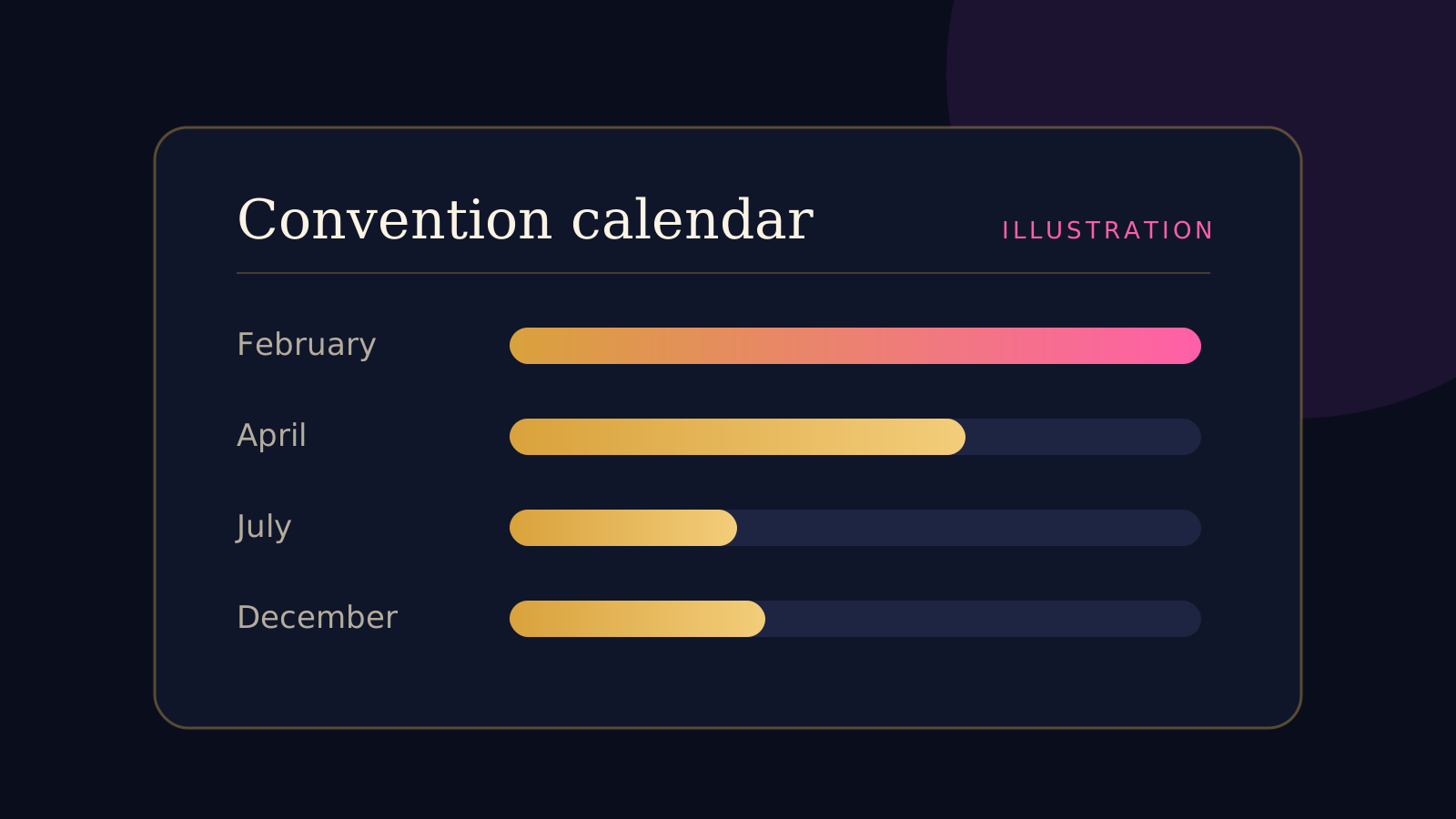
They also swing sharply by month. In LVCVA's 2024 figures, February brought about 765,000 convention attendees and July about 252,000. A plan that treats every Tuesday the same misses that swing entirely; our guide to tourist search intent shows how it fits the wider demand pattern.
The biggest shows of 2026
| Show | When | Reported attendance |
|---|---|---|
| CES | January | More than 148,000 in 2026 |
| ConExpo-Con/Agg | March, every three years | More than 140,000 in 2026; next in 2029 |
| NAB Show | April | More than 58,000 in 2026 |
| SEMA Show | Early November | Among the largest each year |
Figures are those reported by organizers and trade press. Dates move each year, so confirm them on the official show sites and the LVCVA convention calendar.
Who convention attendees are after hours
The NAB Show offers a useful snapshot: its 2026 organizers reported that 48 percent of attendees were there for the first time and 22 percent traveled from outside the United States. Many convention guests are new to the city, and some are new to the country.
That shapes what they search for. They look close to the convention center or their hotel, on weeknights after long days on a show floor, usually in groups of colleagues deciding together. They need plain answers: how far, what to wear, what it costs, whether a group of six can get in without a booking.
What to publish, and when
- Six to eight weeks before: note the show dates in your calendar and plan any group offers or special hours.
- Two to three weeks before: publish a page for that week with hours, entry details, group options and transport from the convention center.
- The week before: add special hours to your Business Profile and post a short update.
- During the show: keep hours accurate and answer reviews and questions quickly.
Compare calls and direction requests from your Business Profile in show weeks with ordinary weeks. After a year, you will know which shows are worth planning for and which are not.
Turning that interest into group bookings is covered in venue conversion, and positioning for groups in gentlemen's club marketing.
Matching shows to audiences
| Kind of show | What attendees often look for after hours (illustrative) |
|---|---|
| Technology | Late, lively venues near their hotel; groups from the same company |
| Trade and construction | Sports bars, steak and clubs; big groups |
| Beauty and fashion | Stylish lounges and shows; mixed groups |
| Medical and professional | Quieter, discreet venues; smaller groups |
Rough patterns only; your own booking data tells the real story.
Where the shows are
Most large shows run at the Las Vegas Convention Center, the Venetian Expo and the Mandalay Bay convention center. Attendees stay near those venues and look for nightlife close by. Venues should know which shows are running where each week, and say how far they are from each convention center by rideshare.
Weeknights become weekends
During big shows, Tuesday and Wednesday can be as busy as a Saturday. Plan staffing, hours and promotions around the show calendar rather than the usual week, and update the maps profile when hours change.
Business guests and receipts
Many convention guests expense their evenings or entertain clients. Clear itemized receipts, discreet billing descriptions and group packages that are easy to explain to an accounts team all help. State these plainly on the website.
International attendees
Large shows bring visitors from abroad who search in their own languages and are unfamiliar with Las Vegas customs, such as tipping and cover charges. A short page in two or three common languages, or at least clear English with simple words, helps them choose with confidence.
Comparing show weeks year on year
Compare each show week with the same show the previous year, not with the week before. Note what changed: prices, promotions, opening hours, the show's attendance. Over two or three years, the venue learns which shows are worth preparing for.
Preparing the team
Big show weeks bring larger groups, different expectations and many first-time visitors. Brief staff on which shows are in town, schedule enough hosts and security, and make sure everyone can explain entry, prices and how to get back to the hotel. A smooth night during a big show earns reviews and recommendations that last all year.
Partnerships during shows
Some venues work with event organizers, hotels or corporate hosts during shows. Keep any arrangement lawful and transparent, with clear terms on what each side provides. Never offer incentives that could breach a company's own policies on entertainment.
Pages for show weeks
Create a page for each major show week with dates, extended hours, group packages and how far the venue is from the convention centers. Publish it a month ahead, share it with partners and keep it live afterwards with a note about next year's dates.
Quiet weeks between shows
Between big shows, attention turns to locals and weekend tourists. Use quiet weeks for website updates, staff training and profile work, so the venue is ready when the next show arrives.
Group size during shows
Convention groups can be large and arrive late after dinners. Hold capacity for them on the busiest nights, confirm numbers in the afternoon, and have a plan when a group of ten becomes twenty.
After the show
Send a short thank-you to company hosts who booked, and note what they liked for next year. Repeat business from the same companies and shows is often the most valuable kind.
A note on discretion
Business guests value privacy. Never mention company names, attendees or bookings in public posts, and keep receipts plain.
Checking the calendar early
Convention dates are published well ahead. Review the coming year's calendar each fall, mark the biggest shows, and plan staffing, events and pages around them before competitors do. A venue that knows a huge show is coming in March can prepare pages, offers and staff rotas months in advance.
Measuring a show week
For each show week, note profile views, calls, group bookings and revenue, and compare with the same show the year before. Keep notes on hours, staffing and offers, so next year's plan starts from evidence rather than memory.
Next steps in the guides
How visitors search throughout their trip is covered in tourist search intent, and group bookings in bachelor party search marketing.
Official sources
Primary sources only. Where a rule matters to your business, read it there rather than in a summary.
Questions from venues
Which Las Vegas conventions are the largest?
In 2026, CES reported more than 148,000 attendees and ConExpo-Con/Agg more than 140,000. SEMA in early November is another of the largest shows each year.
Where can we find the convention calendar?
The LVCVA publishes a convention calendar on its business site, and trade press lists shows with dates, venues and expected attendance. Check both a few months ahead.
Do convention attendees search differently?
Many are first-time visitors searching on weeknights, in groups of colleagues, often close to the convention center or their hotel. Clear directions, dress code and group pricing matter most.